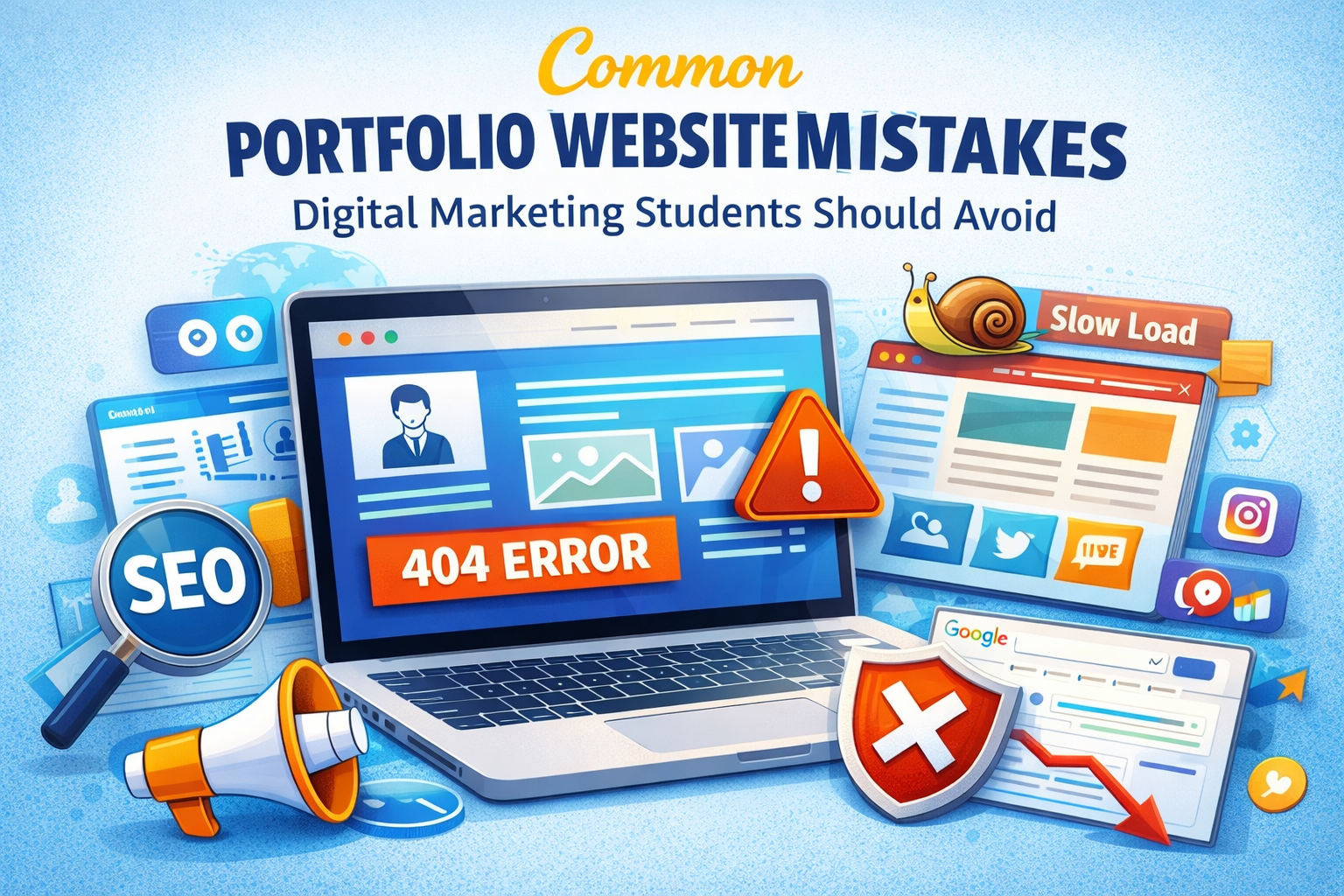
Creating a digital marketing portfolio website is an essential step, but many students make digital marketing portfolio website mistakes that reduce its impact of their work, but by focusing on strategy, clarity, and real projects, these mistakes can easily be avoided.
After building my own portfolio website and reviewing many student portfolios, I’ve realized that a strong portfolio is not about doing everything—it’s about doing the right things clearly and honestly. Below are the most common digital marketing portfolio website mistakes students make and practical tips to avoid these portfolio website mistakes.
1. Trying to Look Like an Experienced Professional
One of the biggest mistakes students make is pretending to have years of industry experience. Adding fake job roles or exaggerating skills might look impressive at first, but recruiters can easily spot this.
Instead, present yourself confidently as a student or fresher. Highlight internships, academic projects, certifications, and self-initiated work. Authenticity builds trust and shows a genuine learning mindset.
2. Focusing Too Much on Tools, Not Strategy
Many portfolios list multiple tools but fail to explain how they were used strategically. Tools alone do not make you a good digital marketer—your thinking does.
Recruiters want to understand:
- Why you chose a particular strategy
- How you planned your content or SEO
- What problem you were trying to solve
I’ve explained my own approach in digital marketing strategy for my portfolio website, where I detail how planning and execution matter more than just tools.
3. Overdesigning the Website
A visually attractive website is good, but overdesigning it can distract from your content. Heavy animations, unnecessary sections, and cluttered layouts often confuse visitors.
A strong digital marketing portfolio website should be:
- Simple and easy to navigate
- Mobile-friendly
- Fast-loading
- Content-focused
Clean design reflects clarity of thought, which is essential in marketing roles.
4. Ignoring SEO Basics
Another common mistake is not applying basic SEO to the portfolio website itself. If you claim to know digital marketing, your own website should reflect that knowledge.
Ignoring SEO basics such as:
- Proper headings
- Optimized titles
- Internal linking
- Image alt text
can weaken your portfolio’s credibility. Even basic SEO implementation shows practical understanding.
5. Not Showcasing Real or Practical Work
Some students focus only on theory and certifications but forget to showcase actual work. Recruiters look for proof of application, not just learning.
Practical work can include:
- Blogs or content samples
- Website creation or optimization
- Case-study style projects
- Strategy planning documents
Even self-initiated projects add value when explained clearly.
6. Missing Clear Positioning
Many student portfolios fail to clearly communicate what the student wants to specialize in. If everything is mentioned, nothing stands out.
Your portfolio should clearly answer:
- Are you more interested in SEO, content, social media, or analytics?
- What kind of roles are you targeting?
Clear positioning helps recruiters quickly understand your profile.
7. Not Sharing the Learning Journey
A major mistake is only showing results without explaining the learning process. Recruiters appreciate growth, reflection, and self-awareness.
I’ve shared this in detail in my post on lessons I learned while building my portfolio website, where I reflect on challenges, mistakes, and improvements made during the process.
8. Making It Hard to Contact You
Surprisingly, many portfolios hide or complicate contact information. No matter how good your portfolio is, recruiters should be able to reach you easily.
Always ensure:
- Resume is easy to download
- Contact details are visible
- Navigation is simple
A strong portfolio encourages action.
Final Thoughts
Creating a digital marketing portfolio website is not about being perfect—it’s about being clear, honest, and practical. Most mistakes happen when students try to impress instead of communicate.
By avoiding these common mistakes and focusing on strategy, clarity, and real learning, students can build portfolio websites that truly stand out and reflect their potential.
Your portfolio should not just show what you know—it should show how you think.

