What Makes a Strong Digital Marketing Portfolio Website
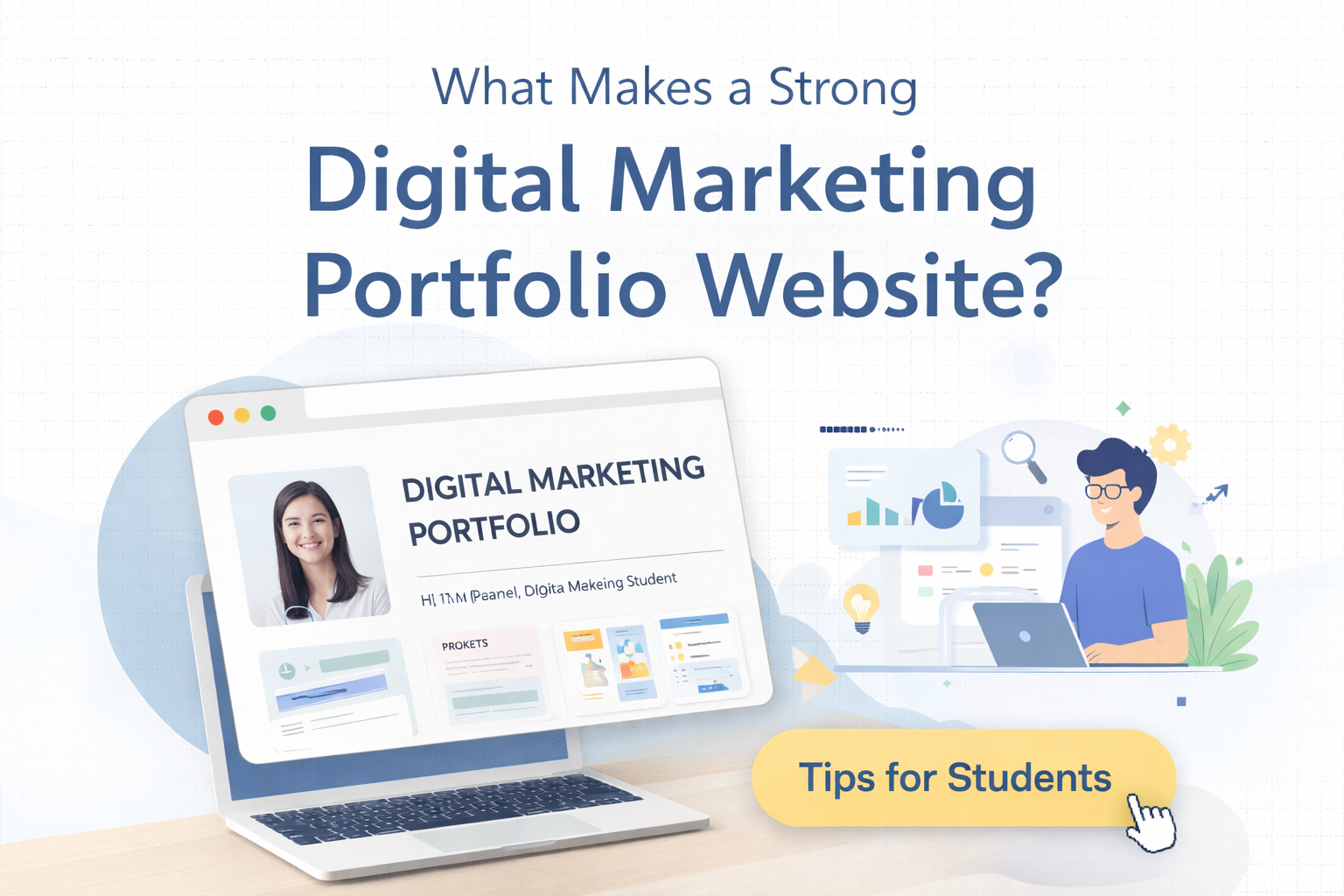
As a Digital Marketing student, your portfolio website is more than just an online resume. It is proof of your skills, thinking ability, and practical understanding of marketing. In a competitive job market, especially for freshers, a strong portfolio website can become your biggest advantage. After planning, building, and optimizing my own digital marketing portfolio website, I realized that recruiters don’t look for perfection—they look for clarity, relevance, and intent. From a student’s perspective, here’s what truly makes a digital marketing portfolio website strong and impactful. 1. Clear Purpose from the First Scroll A strong portfolio website immediately answers three questions: Who are you? What do you do? Why should someone hire you? Your homepage should clearly state that you are a Digital Marketing student or fresher, along with your key interests such as SEO, content marketing, social media, or analytics. Avoid vague statements. Simplicity and clarity matter more than fancy design. Recruiters spend very little time initially, so if your purpose is not clear within the first few seconds, they may not explore further. 2. Student Positioning, Not Fake Experience One common mistake students make is trying to look like industry experts with years of experience. A strong portfolio embraces the student identity but presents it professionally. Instead of pretending to have years of experience: Highlight internships, live projects, certifications, and self-learning Explain what you learned and how you applied concepts practically Be honest and confident about being in the learning phase Recruiters appreciate transparency and growth mindset more than exaggerated claims. 3. Real Projects and Practical Work A strong digital marketing portfolio website focuses on what you have done, not just what you know. This can include: Personal website or blog SEO-optimized content you’ve written Social media strategies or sample calendars Campaign ideas or case-study-style projects Website planning, execution, and optimization process Even if projects are self-initiated, explain your approach, objectives, and learnings. Practical exposure—no matter how small—adds credibility. 4. Strategic Thinking Over Tools Knowing tools is important, but what truly makes a portfolio strong is how you think as a marketer. Recruiters look for answers to questions like: Why did you choose a particular strategy? How did you plan your content or SEO structure? What was your logic behind targeting a specific audience? When you explain your decisions clearly, it shows marketing maturity. Tools can be learned, but strategic thinking takes time—and that’s what sets strong portfolios apart. A strong portfolio reflects strategic thinking, not just tool knowledge. Every decision—from content structure to targeting—should have a clear purpose. I’ve explained my approach in detail in digital marketing strategy for my portfolio website, where I share how I planned and executed the strategy step by step. 5. Simple, Clean, and Mobile-Friendly Design Design doesn’t need to be complex to be effective. A strong portfolio website: Is easy to navigate Loads quickly Looks good on mobile devices Uses readable fonts and consistent colors Cluttered layouts and over-designed pages distract from your content. Clean design reflects clarity of thought, which is extremely important in marketing roles. 6. SEO Basics Applied Correctly You don’t need advanced SEO, but applying basic SEO principles strengthens your portfolio. This includes: Clear page titles and headings Relevant keywords used naturally Proper internal linking between blogs Optimized images with alt text Applying SEO to your own website shows that you don’t just learn concepts—you implement them. 7. Learning Journey and Growth Mindset A strong student portfolio shows progress, not just final outcomes. Blogs or sections where you share: Lessons learned while building your website Mistakes you made and how you fixed them How your understanding of digital marketing evolved This reflects curiosity, self-awareness, and willingness to improve—qualities recruiters genuinely value. I’ve shared some of these experiences in detail in my post on lessons I learned while building my portfolio website, which highlights practical challenges and key takeaways from the process. 8. Easy Access to Resume and Contact Details No matter how good your content is, your portfolio should make it easy for recruiters to reach you. Ensure that: Your resume is easily accessible Contact information is visible Social or professional profiles are linked (if relevant) A strong portfolio always encourages the next step—connection. Final Thoughts From a student’s perspective, a strong digital marketing portfolio website is not about being perfect or pretending to be an expert. It’s about showing intent, effort, learning, and strategic thinking. When your portfolio clearly reflects who you are, what you’ve learned, and how you apply marketing concepts in real scenarios, it naturally stands out. For students and freshers, authenticity combined with clarity is the real strength. Your portfolio is your story—make sure it tells the right one.

